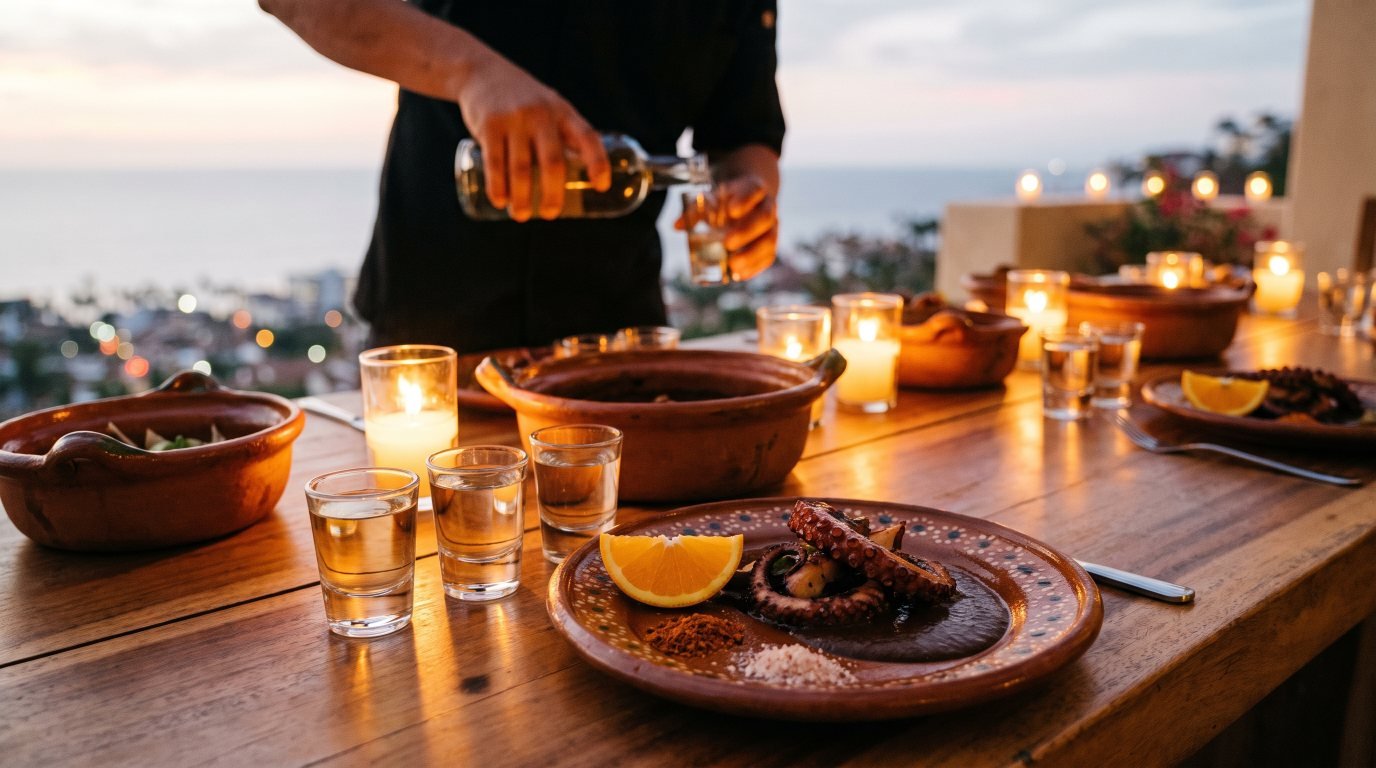
Puerto Vallarta sits in a lucky spot on the agave map. Two hours inland is Tequila and the blue-agave highlands; a few hours south is Oaxaca's smoky mezcal country by plane; and right here, in the mountains behind the bay and down the coast toward Cabo Corrientes, is the home of raicilla — the agave spirit almost nobody outside Jalisco has tasted. A pairing dinner built around all three is, for our money, the most "only in Vallarta" thing a private chef can cook for you.
This guide explains what each spirit actually is, how we structure a pairing dinner in your villa, which dishes make which spirits sing, and what it costs. If you've only ever had tequila in a shot glass with salt and lime, consider this the correction.
The Three Spirits, Briefly
Tequila
Made only from blue Weber agave, mostly in the highlands and valley around the town of Tequila, Jalisco. Look for 100% agave on the label (the alternative, "mixto," is 51% agave and the source of most bad memories). The four main expressions we pour: blanco (unaged — bright, peppery, cooked-agave sweetness), reposado (2–12 months in oak — rounder, vanilla and caramel), añejo (1–3 years — deeper oak, dried fruit, best sipped) and extra añejo (3+ years — closer to a cognac).
Mezcal
Can be made from dozens of agave species and is mostly produced in Oaxaca. The signature smoke comes from roasting agave hearts in underground pits over wood. Beyond the smoke there's enormous range: espadín is the workhorse, while wild agaves like tobalá, tepeztate and madrecuishe bring minerality, green pepper, tropical fruit and earth. Mezcal loves fat, char and acid — which is why it pairs so well with grilled seafood and mole.
Raicilla — Vallarta's own
Raicilla got its Denomination of Origin in 2019, and the zone covers the Sierra Occidental of Jalisco (towns like Mascota, San Sebastián del Oeste and Talpa, all a day trip from Vallarta) and the coast, including Cabo Corrientes just south of the bay. It's typically made from Agave maximiliana or rhodacantha, roasted in above-ground stone or adobe ovens rather than pits, and fermented in wooden vats. The result is usually less smoky than mezcal and more floral, fruity and funky — think green apple, tropical fruit, wet earth and a faint cheesy note in the wilder bottles. Coastal raicillas (raicilla de la costa) tend to be brinier; mountain raicillas (de la sierra) more herbal and floral. Most bottles never leave the state, which makes a flight in your villa genuinely rare.
How We Build an Agave Pairing Dinner
A pairing dinner is a private dinner service with a spirit matched to each course, poured and introduced by the chef (or a sommelier-style host for larger groups). The standard format is four spirits and five courses, about two and a half hours at the table. We pour small — 1 oz per spirit — so the whole flight is roughly the alcohol of two cocktails, and we always run a non-alcoholic pairing in parallel (agua fresca, house sodas, a zero-proof paloma) for anyone not drinking.
Sample menu: "Sierra to Sea"
- Aperitif — Paloma with blanco tequila & fresh grapefruit. Passed with tostadas of tuna, avocado and serrano.
- Course 1 — Coastal raicilla × aguachile verde of shrimp. Briny, citrusy raicilla against lime, cucumber and green chile: the spirit's salinity and the aguachile's acid amplify each other.
- Course 2 — Espadín mezcal × grilled octopus with mole negro. Smoke on smoke, but the mole's chocolate and chile sweetness softens the mezcal. Our grilled octopus recipe is the base for this dish.
- Course 3 — Mountain raicilla × roasted catch of the day, salsa macha, charred pineapple. The floral, green-fruit character of a sierra raicilla is made for the sweet-heat of macha and fruit.
- Course 4 — Reposado tequila × arrachera or short rib with chile ancho butter and smoky esquites. Oak and caramel meet beef and char.
- Dessert — Añejo tequila × cajeta flan with toasted pecans — or a raicilla-based digestif with dark chocolate and sea salt.
Every course is adjustable: vegetarian versions (roasted maitake mushrooms with mole, smoked beet aguachile) pair just as well, and the flight can be built entirely from tequila if the group wants to go deep on one category.
Rule one of pairing agave spirits: pour small, serve neat, serve at room temperature, and let the food do the talking. Salt and lime are for hiding bad tequila. You won't need them.
Pairing Principles: What Goes With What
- Blanco tequila → citrus, raw seafood, fresh chiles. Ceviche, aguachile, oysters. The spirit's pepper and cooked-agave sweetness love acid.
- Reposado → grilled meats, roasted vegetables, anything with caramelization. Arrachera, al pastor, roasted sweet potato, mushrooms.
- Añejo / extra añejo → dessert, dark chocolate, aged cheese, cigars. Treat it like a brandy.
- Mezcal → smoke, fat and char. Grilled octopus, pork belly, moles, chorizo, grilled corn. Also surprisingly good with oysters and tropical fruit.
- Raicilla → bright, funky, fruity. Aguachile, coconut, tropical fruit, fresh herbs, goat cheese, salsa macha. Coastal raicilla with seafood; sierra raicilla with roasted vegetables and lighter meats.
A few local dishes pair so naturally that we build entire menus around them; our guide to the must-try dishes of Puerto Vallarta and the fresh seafood of the bay are good places to see what's in season.
Where the Bottles Come From
We source flights from producers we know. For raicilla that means small brands out of Mascota, San Sebastián del Oeste and the Cabo Corrientes coast — some of which are sold only in a handful of shops in Vallarta. For tequila, we favor additive-free 100% agave houses over big-brand celebrity labels; for mezcal, artisanal espadín plus one wild agave to show the range. Bottles are billed at cost, and any unfinished bottle is yours to keep — a better souvenir than anything at the airport.
If you'd rather taste at the source first, day trips to the tequila distilleries and to San Sebastián del Oeste in the sierra are easy to arrange from Vallarta — PV Tours and Tours Vallarta run both, and Visita Vallarta has background on the sierra towns. Bring back a bottle and we'll build the dinner around it.
What an Agave Pairing Dinner Costs
- Pairing dinner (4 spirits / 5 courses): chef service and pairing coordination, quoted per group + groceries at cost
- Spirits flight: at cost, depending on the labels (premium añejos and rare raicillas push it up)
- Groceries: at cost — a seafood-and-beef menu sits in the middle of the range
- Add a tasting host / sommelier: flat fee per evening for groups over 10, so the chef can stay in the kitchen
- "Flight before dinner" option: a three-pour guided tasting as the aperitif to any regular menu for a small per-guest add-on
For context, the pairing dinner sits just above our standard multi-course dinner pricing — the difference is the coordination, the pours and the tasting notes. Our cost guide has the full picture.
Who Books This
- Couples on an anniversary or honeymoon who want a "wine dinner" but in Mexico — see also our romantic dinner guide.
- Bachelor and bachelorette groups as a classier alternative to a bar crawl on night one (here's how we plan bachelorette dinners).
- Corporate groups and incentive trips looking for a team dinner with a story — it doubles as an activity.
- Serious spirits people who've done the Tequila tour and want to taste raicilla properly before it's on every menu in Brooklyn.
- Yacht charters — a three-pour sunset flight with ceviche off Punta Mita, through our yacht dinner service.
Taste Jalisco at your own table
Tell us your dates, headcount and whether the group leans tequila, mezcal or "surprise us."
WhatsApp the ChefTasting Tips for the Table
- Glassware: a small tulip-shaped glass or a Riedel tequila glass concentrates aromatics; a traditional jícara or clay copita is authentic for mezcal and raicilla. We bring both.
- Temperature: room temperature, never chilled. Cold mutes everything that makes these spirits interesting.
- Sip, don't shoot: "kiss" the spirit first — a tiny sip to calibrate — then a real sip held for a moment.
- Between pours: water and a bite of orange with sal de gusano (worm salt) or a plain tortilla chip reset the palate.
- Order: we pour lightest to heaviest — blanco or coastal raicilla first, añejo or the smokiest mezcal last.
Frequently Asked Questions
Raicilla is an agave spirit from the state of Jalisco — specifically the mountains and coast around Puerto Vallarta — with its own Denomination of Origin since 2019. Tequila must be made from blue agave in the Tequila region; mezcal is mostly from Oaxaca and is usually smoky from pit-roasting. Raicilla uses wild and semi-wild agaves like maximiliana and rhodacantha, is often roasted in above-ground ovens, and tends to taste fruitier and more floral than mezcal, with less smoke.
Agave pairing dinners are quoted per group: the chef service and pairing coordination are priced for your headcount, date and location, and the spirits and groceries are billed at cost. The flight is the biggest variable — premium añejos and rare raicillas cost more than a solid mid-range selection. Groups of 6–12 are ideal. Use the quote builder and pick "Tequila · raicilla · mezcal pairing" under Drinks for an all-in figure.
Either. We can source a curated flight of bottles — including raicillas from the Sierra Occidental and coastal Cabo Corrientes producers that rarely leave Jalisco — billed at cost, or you can bring bottles you've picked up locally and we'll pair around them.
Yes, and it often converts them. Most people's bad tequila memories come from mixto shots. A sipping flight of 100% agave blanco, a reposado, a raicilla and a mezcal — served neat, at room temperature, with food designed for each — is a completely different experience. We also include a non-alcoholic pairing for anyone not drinking.
The standard format is four spirits and five courses: an aperitif cocktail, then one spirit paired with each of four courses, finishing with an añejo or a sweet mezcal-based dessert pairing. We can scale from a three-pour tasting before a regular dinner to a full seven-course tasting menu.
Yes. Sunset agave flights on a chartered yacht are popular, paired with ceviche and tostadas rather than a full multi-course dinner. See our yacht dinner service for how it works.